Recommended path
Get more value from this case in three moves
Use the case as proof, pair it with strategic framing, then reconnect it to live market movement so the page becomes part of a larger narrative.
01 · Current case
Data Governance And Quality Framework
A production-grade framework that embeds data quality validation, contract enforcement, and governance checks into every layer of the data pipeline, from ingestion to mart delivery.
02 · Strategic framing
Scalable Data Platform Architecture: Engineering Patterns
Translate this implementation proof into executive language, tradeoffs, and a clearer decision story.
03 · Live context
Zero-Downtime Patching in Lakebase Part 1: Prewarming
Bring the case back to the present with a market signal that shows why the architecture still matters now.
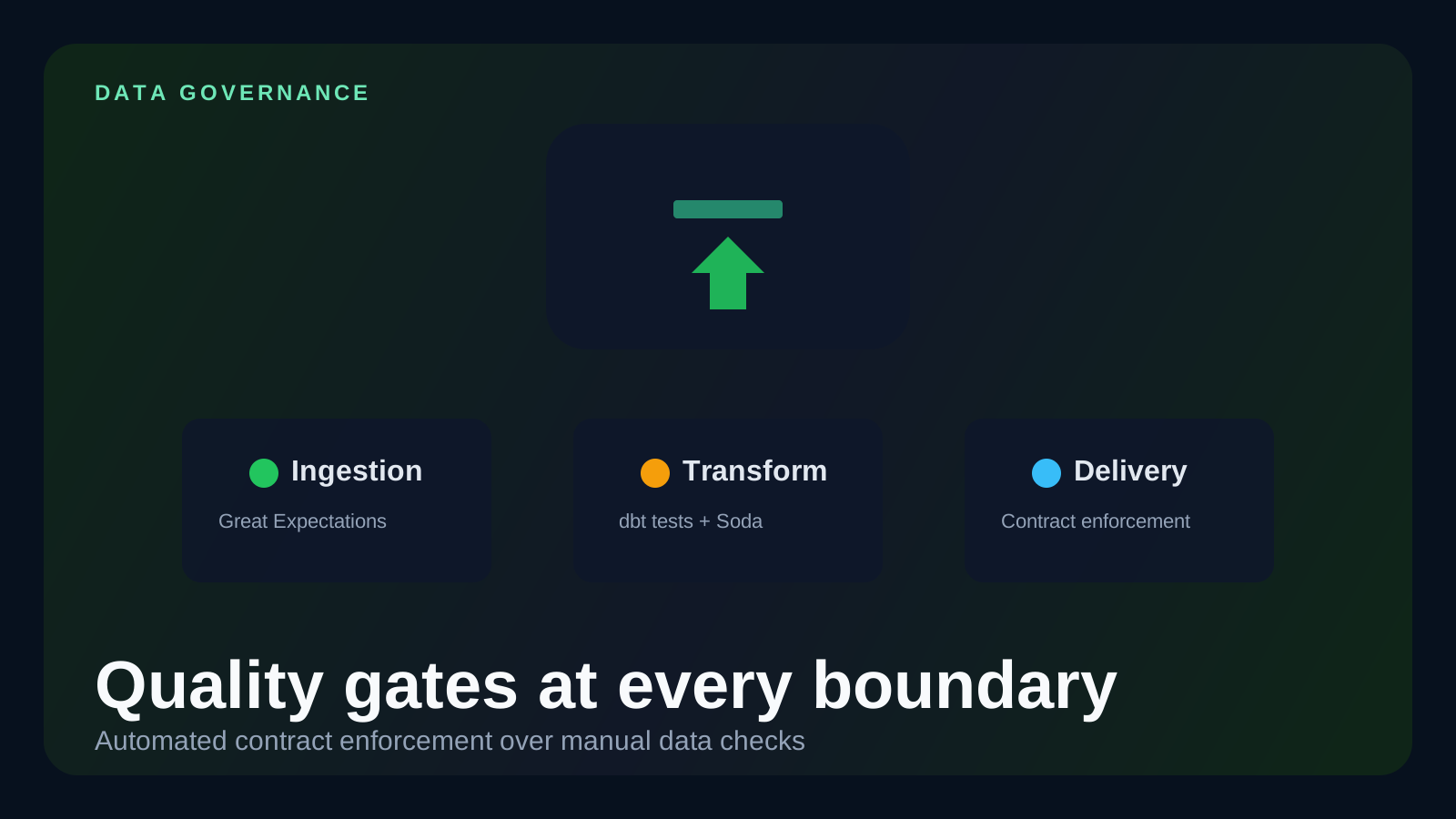
Data Governance And Quality Framework
Automated data quality gates across the entire pipeline lifecycle
The challenge
Most data teams discover quality issues after dashboards break or business decisions go wrong. Manual checks do not scale, and silent failures erode trust in the data platform faster than any new feature can rebuild it.
How we solved it
- - Define data contracts with Great Expectations suites and Soda checks at ingestion, transformation, and delivery boundaries
- - Enforce schema evolution rules and freshness SLAs through dbt tests and custom macros
- - Orchestrate validation gates with Airflow so pipelines fail visibly before bad data propagates
- - Surface quality metrics in a governance dashboard that tracks coverage, pass rates, and SLA breaches over time
Execution story
Quality is not a separate layer but a constraint woven into every pipeline stage. Ingestion validates structure, dbt tests validate business rules, and Airflow gates prevent promotion of data that fails contract checks. A Postgres-backed dashboard gives the team visibility into quality trends without requiring a separate observability vendor.
What this case proves
Governance does not have to be a bureaucratic layer that slows teams down. This framework shows that contract enforcement, quality validation, and freshness monitoring can live inside the same pipeline code that engineers already maintain.
Why that matters
The business cost of bad data is invisible until it is not. A wrong metric in a board deck, a duplicate customer in a CRM sync, a stale forecast that drives the wrong inventory decision. This framework makes those risks visible and preventable before they reach anyone who depends on the numbers.
Tradeoffs worth calling out
Adding quality gates increases pipeline runtime. The design handles this by running validation in parallel where possible and failing fast at boundaries rather than checking everything at the end. The tradeoff is deliberate: slightly longer pipelines that you can trust versus faster pipelines that you cannot.
Practical takeaway
If your team treats data quality as an afterthought, this case shows how to embed it as a first-class pipeline concern without adopting an expensive vendor platform.
Topic cluster
Keep this case alive across strategy and market context
Use the same theme in a new format so technical proof turns into a larger narrative with strategic context and current market movement.
Scalable Data Platform Architecture: Engineering Patterns
Explore how cross-cloud patterns and reliable transformation layers build scalable data platforms ensuring governance and accelerating analytics delivery.
dbt's evolution keeps analytics engineering in the platform spotlight
This matters because analytics is increasingly judged on reliability and governance, not just dashboard output. Teams that treat transformation as a strategic layer improve trust, delivery quality, and long-term platf...
Governed AI Analytics Requires Strong Data Engineering
Build governed AI analytics on contracts and metadata to turn text-to-SQL and copilots from demos into production products. Learn the engineering path to trustworthy AI.
Continue reading
Keep the proof chain moving
Use strategy notes and market signals to turn this technical proof into a stronger narrative for hiring, consulting, or stakeholder conversations.