Data Platform Modernization Patterns Beyond Tool Migration
Move beyond tool migration with data platform modernization patterns that separate responsibilities, ensure auditable transformations, and deliver reliable data freshness to the business.
Data Platform Modernization Patterns Beyond Tool Migration
The mistake most teams make
Data platform modernization often gets pitched as a tool migration. That is usually too shallow. A better modernization story explains what gets cleaner, safer, and more reusable once the platform changes.
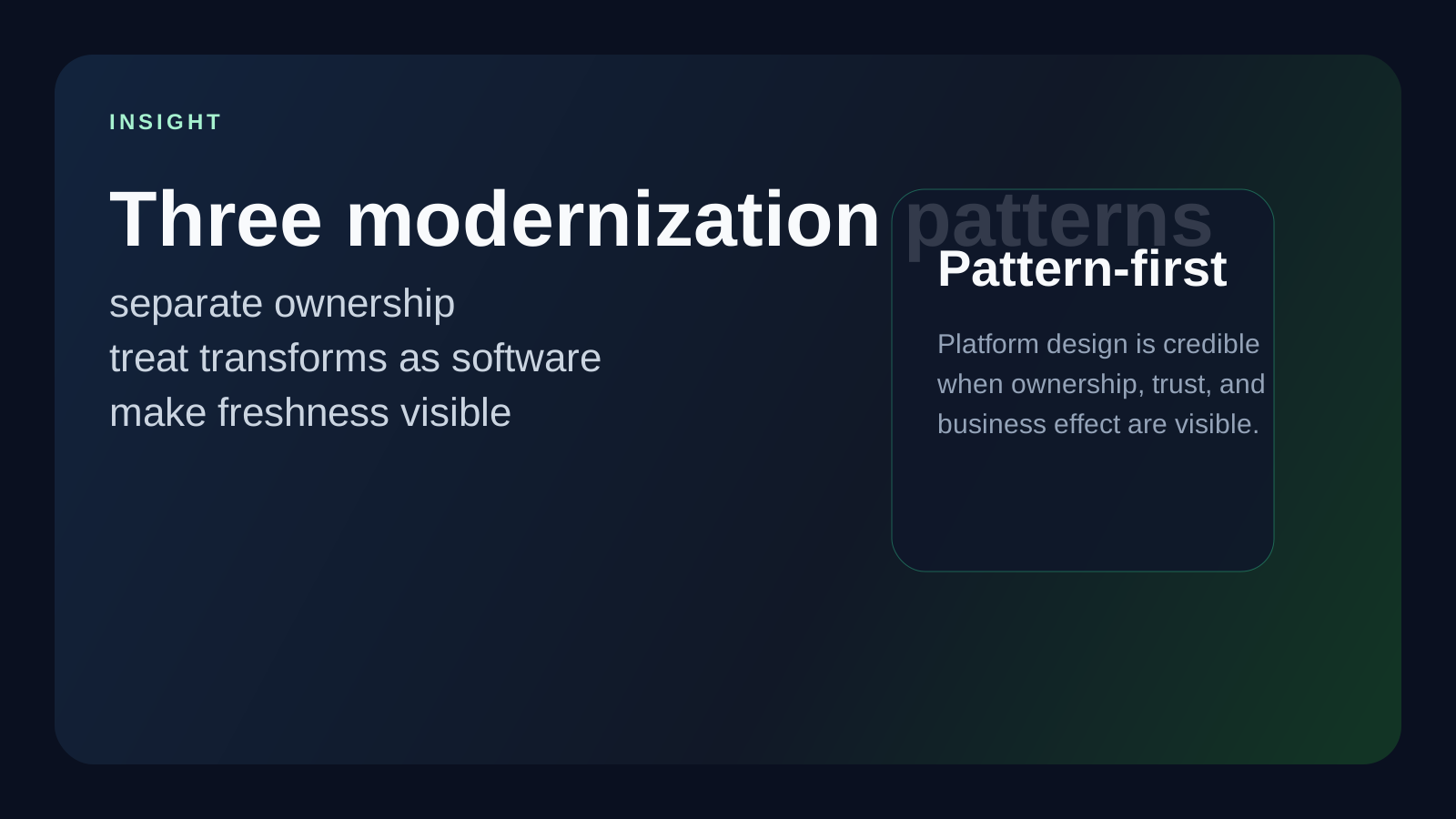
Pattern one: separate responsibilities before you scale them
In the aws-databricks-lakehouse case, storage, transformation, and analytical serving are not blended into one vague cloud layer. S3 owns the landing zone, Databricks owns the processing path, and Delta outputs mark the governed layers. That separation matters because it makes ownership visible.
The lesson is simple: if storage and compute are coupled from day one, every new use case becomes a negotiation about who owns the platform. Separation is not a buzzword. It is an operating model.
Pattern two: treat transformations as software, not hidden reporting logic
The gcp-dbt-modern-data-stack case is useful because it refuses to isolate SQL from the rest of delivery. Terraform provisions the warehouse foundation, Python moves source data, dbt shapes and tests the models, and GitHub Actions reinforces repeatability.
That combination turns trust into something operational. A business stakeholder does not need to read SQL to benefit from it. They benefit when the team can change models with less fear and more auditability.
Pattern three: make freshness visible where the business can feel it
The kafka-debezium-dbt case shows why modernization cannot stop at batch reliability. Sometimes the business pain is delay. In those situations, PostgreSQL WAL capture, Debezium, Kafka, Python normalization, dbt layering, and a visible Streamlit dashboard create a stronger story than a generic promise of real-time data.
Freshness becomes meaningful when the operating path is explainable. Speed without visibility just creates a faster black box.
A useful decision rule
If a modernization proposal cannot answer these three questions clearly, it is probably still tool-first:
- Which layer owns ingestion, transformation, and serving?
- Where are trust and repeatability enforced?
- How does the business notice the difference?
What to do next
Use projects and articles as paired proof. Show one architecture path, one tradeoff, and one business effect. That is how platform modernization stops sounding expensive and starts sounding credible.