Recommended path
Get more value from this case in three moves
Use the case as proof, pair it with strategic framing, then reconnect it to live market movement so the page becomes part of a larger narrative.
01 · Current case
Real-Time CDC Analytics Pipeline
A runnable CDC stack that captures PostgreSQL WAL changes with Debezium, normalizes events in Python, and publishes analytics-ready bronze, silver, and gold layers with dbt and Streamlit.
02 · Strategic framing
Data Engineering and AI Business Value: The Four-Part Test
Translate this implementation proof into executive language, tradeoffs, and a clearer decision story.
03 · Live context
Streaming conversations are moving from speed alone to trustworthy operations
Bring the case back to the present with a market signal that shows why the architecture still matters now.
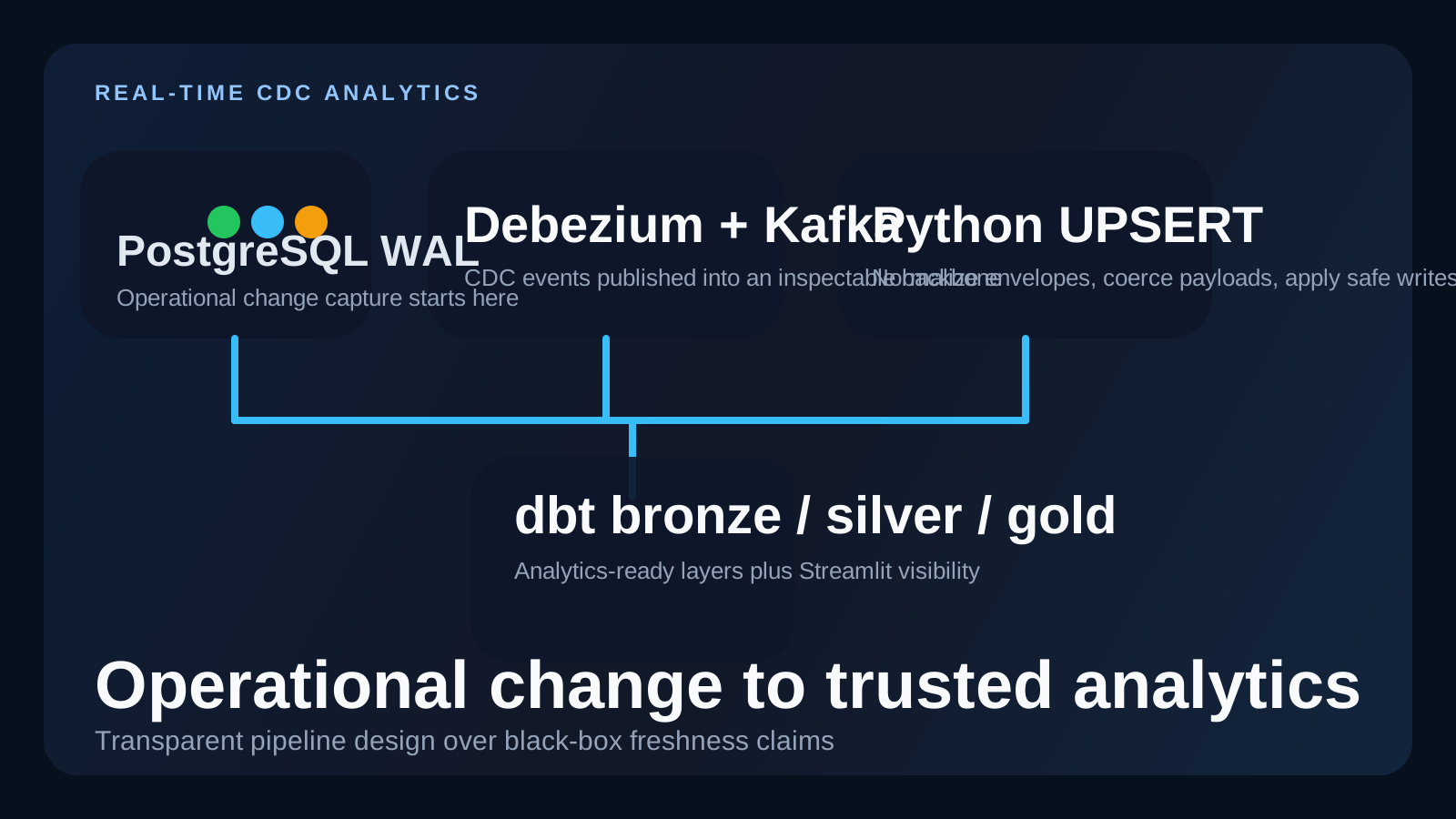
Real-Time CDC Analytics Pipeline
From operational PostgreSQL changes to analytics-ready layers
The challenge
Operational teams needed fresher analytics without buying a heavy black-box ELT layer. The real risk was solving latency by adding a stack nobody could explain, test locally, or evolve safely once schemas changed.
How we solved it
- - Capture row-level PostgreSQL WAL changes through Debezium and Kafka Connect
- - Normalize Debezium envelopes and apply safe UPSERT behavior in a Python consumer
- - Persist replicated records in a target PostgreSQL before modeling bronze, silver, and gold layers with dbt
- - Expose pipeline freshness and analytical outputs in a lightweight Streamlit dashboard
Execution story
The flow is explicit end to end: PostgreSQL source -> Debezium -> Kafka -> Python consumer -> PostgreSQL target -> dbt -> Streamlit. That keeps CDC inspectable instead of magical, which is exactly the point of the case.
What this case proves
This is not a slide about streaming. It is a full path you can inspect, run, and explain in an interview or architecture review. The project captures PostgreSQL changes from WAL, publishes them into Kafka through Debezium, normalizes payloads in Python, and only then promotes the data into dbt layers that analytics teams can trust.
Why the design matters
The strongest decision in this repo is transparency. Instead of hiding transformation logic inside an opaque connector, the consumer owns coercion and UPSERT behavior. That makes the data movement easier to test, easier to reason about, and easier to extend when business rules change.
Tradeoffs worth calling out
The stack is intentionally local-first. It uses Docker Compose, a target PostgreSQL, and Streamlit so the operating pattern stays visible. That is great for proof and learning, but in production you would likely add schema registry, lag monitoring, stronger secret handling, and managed scheduling.
Practical takeaway
If the business problem is stale operational analytics, this case shows a credible middle path: fresher data without pretending every company needs a heavyweight platform from day one.
Topic cluster
Keep this case alive across strategy and market context
Use the same theme in a new format so technical proof turns into a larger narrative with strategic context and current market movement.
ClickHouse Lightweight Deletes: Solving Read Amplification
Fix ClickHouse lightweight delete read amplification to eliminate 4x query latency spikes and optimize S3 read costs across analytical workloads.
Confluent Cloud for Government Achieves FedRAMP Moderate: Mission-Ready Data Streaming for Federal Agencies
This matters because streaming is only strategically valuable when faster operational data improves visibility, responsiveness, and confidence in downstream decisions.
Confluent Cloud’s Path to Post-Quantum Cryptography
This matters because streaming is only strategically valuable when faster operational data improves visibility, responsiveness, and confidence in downstream decisions.
Continue reading
Keep the proof chain moving
Use strategy notes and market signals to turn this technical proof into a stronger narrative for hiring, consulting, or stakeholder conversations.