Data Engineering and AI Business Value: The Four-Part Test
Validate data engineering and AI initiatives with the four-part credibility test. Connect market pressures to architecture and metrics, cutting slideware.
Data Engineering and AI Business Value: The Four-Part Test
The market changed its filter
Executives, recruiters, and clients still care about tools, but tools are no longer the first question. The first question is what problem got smaller: delay, cost, trust, risk, churn, or time-to-decision.
The four-part test for a credible data story
A strong initiative usually survives four checks:
- There is a visible business pressure.
- There is a delivery pattern that fits that pressure.
- There is an implementation artifact someone can inspect.
- There is a metric or operating effect that the business can understand.
If one of those pieces is missing, the story feels incomplete.
What that looks like in practice
The kafka-debezium-dbt case works because the pressure is stale operational analytics, the pattern is CDC plus governed transformation, and the proof lives in a runnable path from PostgreSQL WAL capture to Streamlit.
The aws-databricks-lakehouse case works because the pressure is platform sprawl and weak layer ownership, the pattern is storage and compute separation, and the proof is visible in Terraform, S3 landing, and Databricks silver and gold jobs.
The gcp-dbt-modern-data-stack case works because the pressure is fragile warehouse delivery, the pattern is analytics engineering as code, and the proof is visible in Terraform, Python extraction, dbt tests, and CI.
Why this matters for AI too
AI projects fail for the same reason data projects do: the business promise floats too far above the operating reality. If an agent, model, or data product cannot be tied back to a dependable pipeline, trust erodes fast.
A better way to present your work
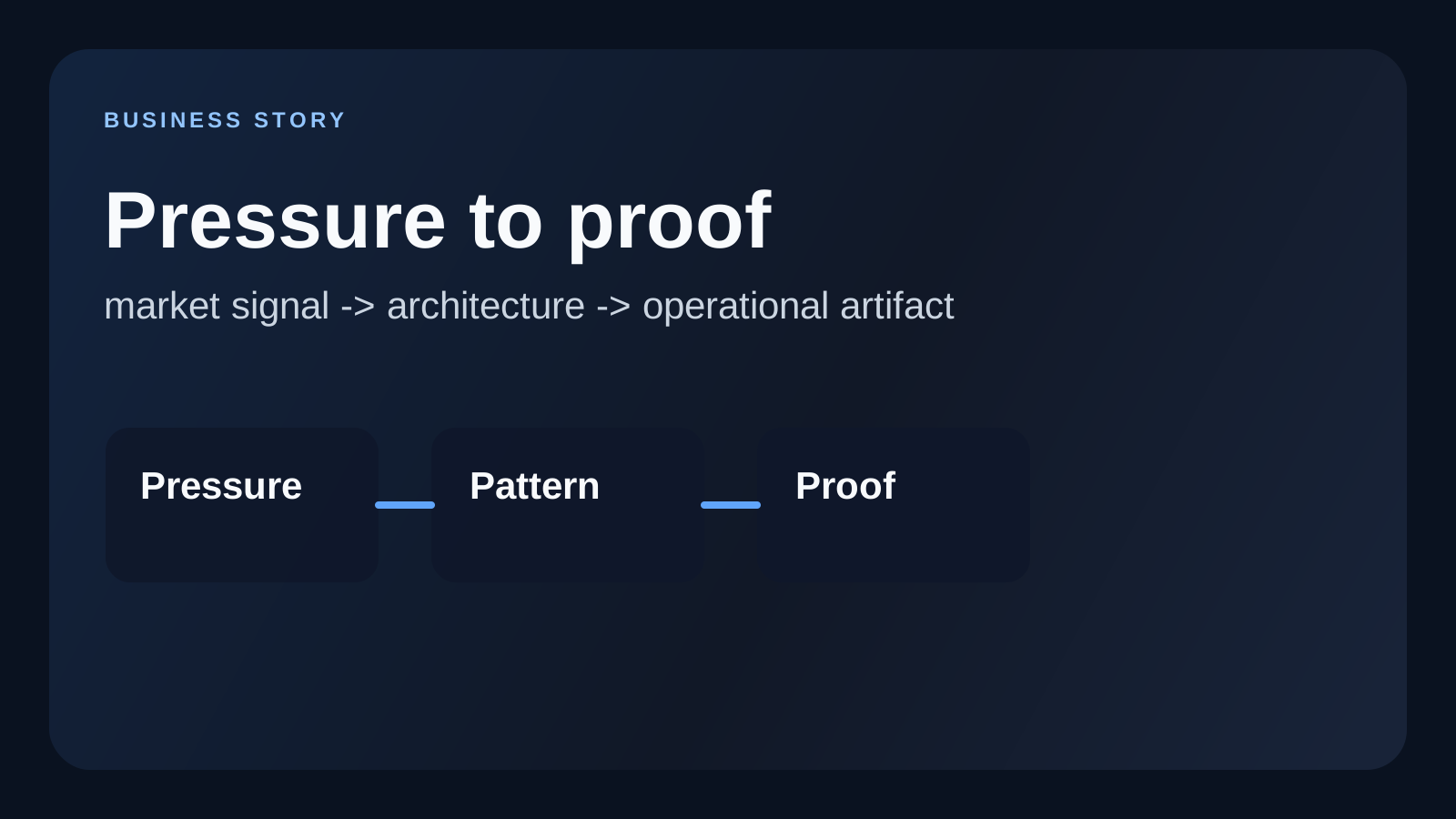
Start with the business pressure. Then name the architecture choice. Then show the repo, artifact, or dashboard that proves the claim. That sequence is far more persuasive than leading with a stack list.
Practical takeaway
The goal is not to sound less technical. The goal is to make the technical work legible to someone who is deciding whether to trust you with a real problem.